
|
CHINESE CALLIGRAPHY IMAGE ANALYSIS PROJECT
Regeneration of Strokes from Chinese Calligraphic Images
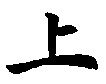

In ancient China, people wrote with brush to form Chinese calligraphy. With the rapid development of information technology, people can simply scan a Chinese calligraphy work and store it in form of images. Many researches focus on the on-line recognition of handwritten Chinese character and signature verification in which an on-line Chinese character database often contains characters formed by strokes with one pixel width. For Chinese calligraphy, the stroke width is an important piece of information and it may vary from one stroke to another and even within one stroke. Besides, the writing behavior of different people towards the same word is not the same. These make it complicated for the analysis of Chinese calligraphic images. Extracting the underlying stokes of Chinese calligraphic images is more than just an image segmentation problem. Various strategies are employed in this project for stroke extraction, stroke direction, stroke order determination and animation of Chinese Calligraphic images.
The project flow is shown as follows.
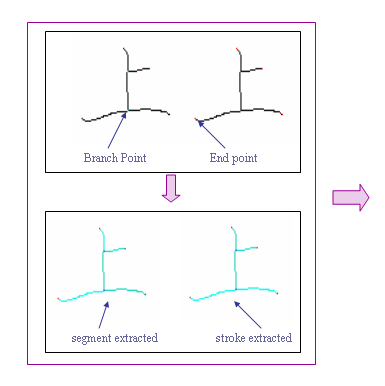
Given an 8-bit grayscale Chinese Calligraphic image, the scenario goes as follows:
Any suggestions or comments are welcome. Please send them to Howard Leung.
 Top of this page