|
CHINESE CALLIGRAPHY IMAGE ANALYSIS PROJECT
Stroke Extraction for Chinese Calligraphy Images
 |
|
   |
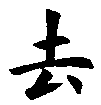
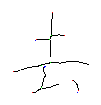
Chinese calligraphy is the most fundamental artistic manifestation for Chinese people. Calligraphy characters are not used only for presenting the meaning to readers, but can also be appreciated as a form of art through various combinations of strokes with certain degree of flexibility. Nowadays, with the advance of technology, Chinese calligraphic artwork can be scanned and stored in the form of images. Given such a character image, the objective of stroke extraction is to extract the individual strokes that form the character. In this project, we propose an algorithm to extract the individual strokes of a Chinese calligraphy character to preserve the original shape of the calligraphy as closely as possible. We perform experiments on three most common styles of calligraphy, Kai-style, Cao-style and Li-style.
Stroke extraction has been considered as a critical part of Optical Character Recognition (OCR) based on structural analysis. Many methods for off-line Chinese character recognition have been proposed to handle printed text font or handwritten characters. As Chinese calligraphy is more complicated and has more variations compared with printed font or handwritten character, the prior work of stroke extraction does not perform well when applied for Chinese calligraphy character images.
Printed font Handwriting Kai-style Cao-style Li-style
Kai-style:
Cao-style:
Li-style:
Howard Leung and Hui Kang, "Stroke Extraction for Chinese Calligraphy Images", Asia Pacific Workshop on Visual Information Processing (VIP2005), Hong Kong, December 2005.
Any suggestions or comments are welcome. Please send them to Howard Leung.

 Top of this page